Character Notes
Tasha & James — On the People Who Stand Closest to the Fire
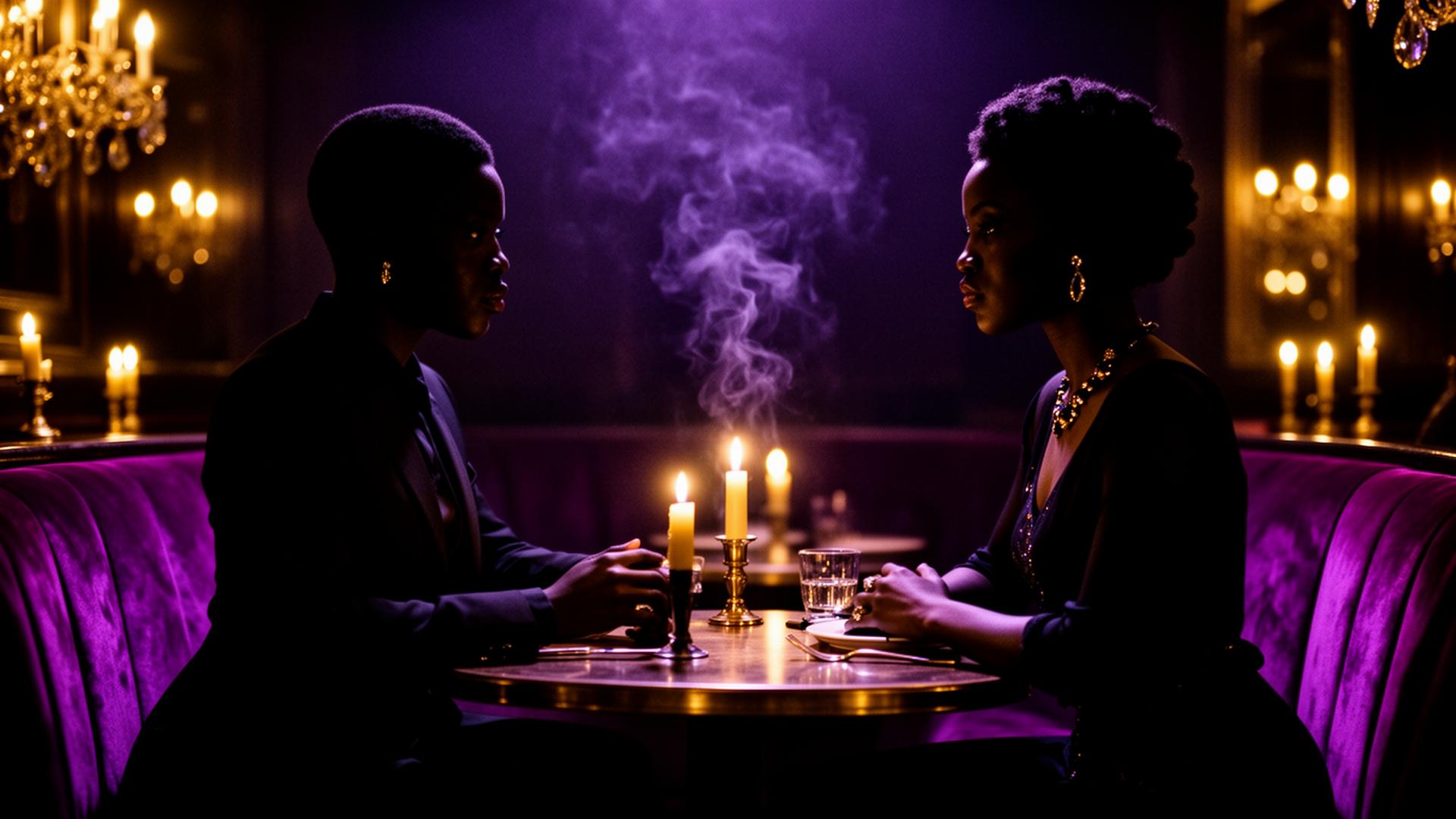
Character Notes
A reflection on friendship, proximity, and the quiet architecture of betrayal — how the people who know your favorite drink can also become the gateway to your deepest heartbreak.
Not every betrayal begins with an enemy.
Sometimes it begins with the people who know your favorite drink, your relationship history, and exactly where your boundaries live.
That is the sentence I kept returning to while I wrote Tasha and James. Not as villains. Not as a twist. As a quiet, ordinary truth that most of us recognize about a year too late.
On Writing People, Not Antagonists
I never wrote Tasha and James as cartoon villains. I wouldn't know how. The women and men who have hurt me most in my own life have almost never been cruel out loud. They were funny. They were familiar. They remembered my mother's birthday. They were standing in my kitchen the night I cried about something else entirely.
That is the version of harm I wanted on the page. Not the kind you see coming. The kind you serve a second glass of wine to.
Tasha is loud, loyal, beautifully styled, and emotionally honest in the ways that cost her nothing. James is charm wearing a coat. They are not monsters. They are something far more dangerous to a woman like Imani — they are *comfortable*. And comfort, in the wrong hands, is its own kind of trespass.
Betrayal Almost Always Arrives Through Proximity
The people positioned to hurt you most are rarely strangers. Strangers cannot touch the soft places. Strangers do not know which sentence will land in the bruise.
Imani is a powerhouse. She reads contracts the way other women read poetry. She can clock a manipulative man across a crowded room in under sixty seconds. And still — *still* — she misses what is happening inside her own friendships. Not because she is naive. Because the people inside the circle have already been pre-approved. The gate is open to them. The locks were disabled, by her own hand, years ago.
Cairo, for his own reasons, has a version of the same blind spot. He sees women clearly. He has not, in a long time, allowed himself to see James clearly. There is a particular kind of loyalty that survives only by refusing to look too closely at the people we have known the longest. Whether James understands how much the people around him excuse on his behalf is a question the novel keeps quietly returning to.
“The people who can hurt you the most are almost never the ones you were warned about. They are the ones who were already inside the house before you knew the house had a door.”
How Familiarity Changes What We Notice
The people we love do not arrive in our lives with warning labels. They arrive with casseroles, with inside jokes, with the kind of laughter that fills a kitchen on a Sunday. By the time a behavior could be called a pattern, we have already been calling it a personality for years. That is not naivete. That is what affection does to perception.
Familiarity edits the room. It softens the thing the stranger would have flinched at. It turns a comment about your body into the way he always teases. It turns a quiet omission from a friend into how she has always been about that stuff. The longer we love someone, the more interpretive work we are willing to do on their behalf — and the more invisible that work becomes, even to us.
Tasha is not cruel. She has simply spent a long time choosing the version of any given evening that requires the least disruption. The smaller truth over the harder one. The kept peace over the named thing. Avoidance, practiced long enough, begins to look a great deal like loyalty, even to the person doing it. Especially to the person doing it.
James is not running a scheme. He is something more ordinary, and in some ways harder to name — a charming man who has been forgiven, gently and repeatedly, for a very long time. He has never been pressed hard enough by anyone who loves him to examine the patterns that keep working in his favor. The room laughs. Someone refills his glass. The moment passes. It always has.
Why Imani and Cairo Trusted the Wrong People
They trusted them for different reasons. That part matters.
Imani trusted Tasha because Tasha had been there through the version of grief that had no audience. The 2 a.m. kitchen-floor grief. The grief that does not photograph well. You do not easily unlove a woman who watched you survive your own father's absence without making it a story she could tell.
Cairo trusted James for a different reason. Some friendships become so familiar that they stop feeling like choices. They become part of the landscape. James had been around long enough that Cairo no longer evaluated him. He simply accounted for him. The friendship had survived years, seasons, mistakes, celebrations, disappointments, and ordinary life. There is a particular kind of loyalty that forms when someone has occupied the same chapter of your life for so long that you stop imagining who you would be without them in it.
To question James in adulthood would require Cairo to revisit years of assumptions he had long ago decided were settled. For a very long time, he would rather absorb the discomfort than reopen those files.
Different doors. Same trespass.
Boundary Testing Arrives Long Before Harm
Here is what I needed the novel to say out loud.
By the time a friendship or a relationship becomes overtly harmful, it has usually been quietly auditioning for the role for months. Sometimes years. The small joke that lands a little too close. The favor asked in the wrong tone. The comment about your body that you laugh at because the alternative is becoming the woman who *can't take a joke*. The phone call where they ask about your relationship in a way that has too much texture to it. The hand that brushes the small of a back that does not belong to them.
None of these things, alone, would convict anyone. That is the point. Boundary testing is designed to be deniable. It is designed to look, in isolation, like nothing. It is designed so that by the time the harm fully arrives, you have already been negotiating with it for so long that you do not trust your own alarm system.
Tasha spent years choosing the version of events that required the least disruption. Small omissions. Editing. Strategic vagueness, mostly aimed at herself. James moved through rooms the way he had always been allowed to move through them, and none of the people who cared about him had ever quite found the moment to say the harder sentence out loud. The novel is not a story about a sudden betrayal. It is a story about a slow one — the kind that gets called a *betrayal* only after we finally stop calling it a *misunderstanding*.
How a Friendship Becomes Toxic Without Anyone Noticing
Toxic friendships rarely begin toxic. That is the cruelest part of writing them.
They begin as refuge. They begin as the group chat that saved you during the worst year of your life. They begin as the friend who told you the truth about a man when no one else would. They begin as love — real love, the kind that is not performance — and then slowly, almost imperceptibly, they begin to require you to be smaller in order to keep them.
You learn not to share certain wins. You learn not to mention certain men. You learn which subjects make her quiet in the way that means *I am editing*. You learn to translate her silences. You learn that the friendship has begun to cost you a self you used to bring into the room.
And by the time you notice — by the time you can name it — the friendship has already been a different shape for a long time. You have simply been the last person in the room willing to admit it.
Why Readers Miss the Red Flags at the Same Time the Characters Do
I wrote it that way on purpose.
Some writers stack the deck early. They give the reader knowledge the character does not have, so the reader can feel clever, can feel safe, can feel *I would never*. I am not interested in that kind of book. I am interested in the book where you, the reader, are sitting at the table with Imani — and you do not see it either. Until you do. And then the whole novel quietly rearranges itself in your hands.
Because in real life, no one hands you the foreshadowing. In real life, you find out about the affair on a Tuesday afternoon between two emails. In real life, the friend you would have sworn on your grandmother's grave for is the one who hands you the news, badly, in a voice you have never heard her use before.
If you missed the red flags in The Lion and the Scorpion, you missed them at exactly the speed Imani did. That is not a mistake. That is the love letter.
“Some love stories are not threatened by enemies. They are threatened by the people sitting closest to the fire — warming their hands, asking for one more glass.”
Why This Part Hurts
The part of this story that lingers, for me, is not the harm itself. It is the grief that comes after — the slow, private work of revising a person you have loved for years. The friend whose laugh used to mean refuge. The friend whose presence used to mean home. You do not lose them all at once. You lose them in small, retroactive flashes, as one memory after another quietly reorganizes itself in a different light.
There is a particular ache in realizing that the red flags were not hidden. They were simply standing inside a room you had already decided was safe. We protect our narratives about the people we love because those narratives are also narratives about ourselves — about our judgment, our history, our years. To revise the person is to revise the years. Most of us, given the choice, will keep the years a little longer than we should.
I am less interested, as a novelist, in who is to blame than I am in how this happens at all.
How good people fail each other.
How love survives long past the point where honesty stopped being part of it.
How loyalty can slowly become avoidance.
How familiarity can make us miss things we would immediately recognize in a stranger.
Those questions interested me far more than assigning heroes and villains.
The Book Underneath the Book
The Lion & The Scorpion is, on its surface, a love story between Imani Blackwell and Cairo Thorne.
Underneath, it is a story about timing, trust, and the things we choose not to see until we can no longer avoid them.
It is a story about how love can be real and still be vulnerable.
How good people can make selfish choices.
How silence can sometimes do as much damage as deception.
Tasha and James matter because they reveal those truths. Not because they are villains, but because they are human.
There are, in the end, no villains in this book.
There are only people — loving imperfectly, avoiding difficult conversations, protecting old narratives, and discovering that every relationship eventually asks for a level of honesty they may or may not be prepared to give.
The tragedy of The Lion & The Scorpion is not that enemies came for a love story.
It is that truth arrived later than it should have.
Some love stories survive distance.
Others must survive the silences kept by the people standing closest to them.
*The Lion and the Scorpion is available now. Read it slowly. Read it in the dark. Then think about the people you've been telling yourself the same story about for years.*
— Nicki
“Boundary testing arrives long before harm. By the time you name it, you've already been negotiating with it for months.”